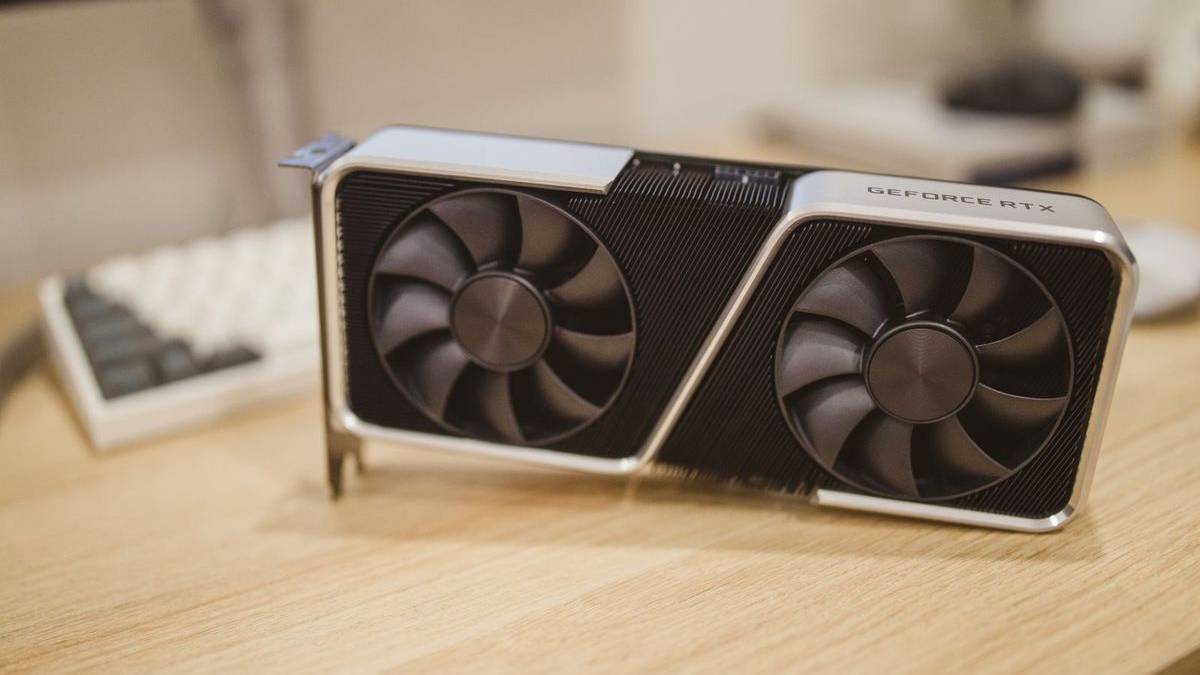
The Short Answer
The cheapest way to run AI on a GPU VPS in 2026 is an RTX 4090 on RunPod Community Cloud at $0.34 per GPU-hour. If you want a datacenter card with an SLA instead of a community host, the L40S is the value sweet spot: $0.79/hr on RunPod Community, $1.09/hr on RunPod Secure, $1.57/hr on DigitalOcean, and $1.67/hr on Vultr. For always-on inference, a dedicated Hetzner GEX45 with a 24 GB RTX PRO 4000 Blackwell costs €214 a month flat — about $0.34/hr equivalent if it runs 24/7 — though a €209 setup fee means it only pays off for steady workloads. The H100 remains expensive everywhere: $2.69/hr is the cheapest single-GPU rate we found (RunPod Community), while DigitalOcean charges $4.41/hr on demand.
All prices below were checked on the providers’ own pricing pages or their public pricing APIs on November 25, 2026. GPU prices move often, so treat this as a snapshot and confirm the live rate before you deploy.
GPU VPS Prices at a Glance
| Provider | GPU | VRAM | $/GPU-hour | Billing | Best for |
|---|---|---|---|---|---|
| RunPod Community | RTX 4090 | 24 GB | $0.34 | Per second | Cheapest hourly AI |
| Hetzner GEX45 | RTX PRO 4000 Blackwell | 24 GB | ~$0.34* | Monthly, flat | Always-on inference |
| Vultr | A16 | 16 GB | $0.471 | Per hour | Cheapest mainstream cloud GPU |
| DigitalOcean | RTX 4000 Ada | 20 GB | $0.76 | Per second | Simple, predictable |
| RunPod Community | L40S | 48 GB | $0.79 | Per second | 48 GB on a budget |
| RunPod Secure | RTX 4090 | 24 GB | $0.89 | Per second | 4090 with an SLA |
| RunPod Secure | L40S | 48 GB | $1.09 | Per second | Best value datacenter card |
| DigitalOcean | L40S | 48 GB | $1.57 | Per second | L40S on a familiar cloud |
| Vultr | L40S | 48 GB | $1.67 | Per hour | L40S with global regions |
| Vultr | GH200 | 96 GB | $1.99 | Per hour | Big VRAM, low price |
| Vultr | A100 PCIe | 80 GB | $2.40 | Per hour | Training on a budget |
| DigitalOcean | MI300X | 192 GB | $2.59 | Per second | Huge VRAM per dollar |
| RunPod Community | H100 SXM | 80 GB | $2.69 | Per second | Cheapest H100 |
| RunPod Secure | H100 PCIe | 80 GB | $2.89 | Per second | H100 with an SLA |
| Vultr | H100 SXM | 80 GB | $2.99 | Per hour | 8-GPU bare metal only |
| RunPod Secure | H100 SXM | 80 GB | $4.39 | Per second | Serious training |
| DigitalOcean | H100 | 80 GB | $4.41 | Per second | H100 on a simple platform |
*Hetzner GEX45 is €214/month plus a €209 one-time setup fee; the $/hr figure is the monthly price spread over 730 hours, so it only applies if the server runs all month.
If you are new to this hardware, start with our explainer on what a GPU server actually is and when you need one — the short version is that the GPU’s VRAM, not its raw speed, is usually what decides which models you can run.
Cheapest Per Hour: RunPod Community RTX 4090 at $0.34/hr
RunPod runs two tiers. Secure Cloud is RunPod’s own datacenter capacity with an SLA; Community Cloud is capacity hosted by vetted third parties, cheaper but with more variable availability. On Community Cloud, an RTX 4090 with 24 GB of VRAM lists at $0.34/hr, and an L40S with 48 GB at $0.79/hr. The same cards on Secure Cloud cost $0.89/hr and $1.09/hr.
The 4090 is a consumer card, not a datacenter card, but for many AI jobs that does not matter: it runs 7B to 13B language models for inference, LoRA fine-tuning that fits in 24 GB, and image generation comfortably. At $0.34/hr, a six-hour fine-tuning run costs about $2. RunPod bills per second with no egress fees, so short experiments cost almost nothing — but Community Cloud stock comes and goes, and you should checkpoint often, because a community host can disappear.
For the H100, RunPod Community lists the SXM version at $2.69/hr, the cheapest single-GPU H100 rate we found anywhere. Secure Cloud charges $4.39/hr for H100 SXM, or $2.89/hr for the slower H100 PCIe variant — a useful distinction, because PCIe H100s are fine for data-parallel fine-tuning but lack the NVLink bandwidth that multi-GPU training needs.
Best Value Datacenter Card: The L40S at $0.79–$1.67/hr
If you want a proper datacenter GPU with ECC memory and no consumer-card quirks, the L40S (48 GB) is the card to compare across providers, because nearly everyone sells it:
- RunPod: $0.79/hr Community, $1.09/hr Secure
- DigitalOcean: $1.57/hr as a GPU Droplet
- Vultr: $1.67/hr as a Cloud GPU instance
The spread is real money at scale: running an L40S 24/7 for a month costs about $577 on RunPod Community versus about $1,146 on DigitalOcean and $1,219 on Vultr (730 hours, simple multiplication). What you get for the premium is a mainstream cloud platform — predictable capacity, familiar tooling, and support — rather than a GPU specialist’s marketplace. For a weekend project, take the cheapest L40S you can find. For a production inference endpoint, the extra $0.50/hr for a mainstream cloud is usually worth it.
Best Mainstream Cloud GPU: Vultr vs DigitalOcean
Vultr and DigitalOcean are the two general-purpose clouds with transparent, public GPU price lists — no sales call required.
Vultr starts its Cloud GPU range at $0.471/hr for an A16 (16 GB), the cheapest on-demand GPU on any mainstream cloud. Its most interesting budget card is the GH200 at $1.99/hr with 96 GB of VRAM — more memory than an A100 at a lower price, though availability is limited. The A100 PCIe (80 GB) lists at $2.40/hr on demand. One catch: Vultr’s H100 is sold as an 8-GPU bare-metal node at $2.99 per GPU-hour ($23.92/hr for the node), not as a single GPU, and the $2.30/hr H100 figure on Vultr’s own product page is the preemptible rate, not on-demand. Vultr is also expanding aggressively in AI infrastructure — see our coverage of Vultr’s Chennai AI supercluster with 10,000 AMD MI355X GPUs — which suggests more AMD capacity is coming to its lineup.
DigitalOcean keeps things simpler: GPU Droplets bill per second with a 60-second minimum, and the range runs from an RTX 4000 Ada at $0.76/hr through the L40S at $1.57/hr to the H100 at $4.41/hr. Its standout value is the AMD MI300X at $2.59/hr with a massive 192 GB of VRAM — the cheapest way to get that much memory on a mainstream cloud, and a good fit for serving large models that need VRAM more than raw speed. Two DigitalOcean quirks matter for your bill: a Droplet that is powered off but not destroyed keeps billing at the full rate, because the capacity stays reserved, and the H100 drops to $3.26/hr on a 12-month reservation if you can commit.
Best for Always-On Inference: Hetzner GEX45 at €214/Month
Hourly pricing is unbeatable for experiments, but the math flips for a model that serves traffic around the clock. Hetzner rents dedicated GPU servers by the month: the GEX45 pairs a 24 GB RTX PRO 4000 Blackwell with a Core i5-13500 and 64 GB of RAM for €214 a month, plus a €209 one-time setup fee. Spread over 730 hours, that works out to roughly $0.34/hr — the same as RunPod’s cheapest hourly 4090 — but with a whole dedicated machine, unlimited traffic, and no one else on the hardware. Billing is hourly with a cap at the monthly price, so a part-month still costs less than the full month.
The catch is the setup fee: about one month’s rent, paid even for short stays, so a GEX45 only beats hourly rentals if you keep it running for weeks, not days. The bigger GEX63 (96 GB RTX PRO 6000 Blackwell) costs €999 a month plus a €999 setup fee. Both run in Helsinki only, and Hetzner has no H100 or H200 cards — if your workload needs those, look elsewhere. Hetzner is a dedicated server, not a VPS, so you manage the whole machine yourself, drivers included.
What “Cheap” Really Costs: The Billing Traps
The headline $/GPU-hour is only part of the bill. Four traps catch first-time GPU renters:
- Powered-off still bills. DigitalOcean charges the full rate until you destroy the Droplet. RunPod stops the meter when you terminate the Pod. Always destroy, never just power off.
- Setup fees. Hetzner’s €209–€999 setup fees are real money on a short rental. Divide the setup fee by the hours you plan to run before comparing with hourly providers.
- Minimum bundles. Vultr’s H100 and A100 SXM are 8-GPU bare-metal nodes. The per-GPU price looks good; the $23.92/hr node total is what your card gets charged.
- “Starting at” prices are not on-demand prices. Vultr’s advertised $2.30/hr H100 and $0.85/hr L40S are preemptible or multi-year contract rates. The on-demand list prices are $2.99/hr and $1.67/hr. Always check whether a quoted rate is on-demand, spot/preemptible, or a 12–36 month commitment.
Egress is the fifth trap at the hyperscalers, but not here: RunPod charges no egress fees, Hetzner includes unlimited traffic, and DigitalOcean bundles a transfer allowance with each Droplet. Storage is the remaining line item — network volumes run roughly $0.05–$0.07 per GB per month at RunPod, so a 500 GB dataset adds $25–$35 a month.
How Much VRAM Do You Actually Need?
VRAM, not the GPU model name, decides which models fit. As a rough guide for inference with 4-bit quantization: 16 GB handles 7B–8B models, 24 GB covers 13B–14B, 48 GB covers 32B, 80 GB covers 70B, and 96 GB and above is where the biggest open models live. Training needs far more headroom than inference — fine-tuning a 7B model with a full optimizer state can want 48 GB or more, which is why the L40S is the default recommendation for training on a budget.
If you are still deciding between renting and buying, seasonal deals sometimes beat all of the above: our Database Mart Black Friday coverage found GPU servers from $11.60 a month — with a three-year prepay catch that makes the headline price misleading for short projects.
FAQ
What is the cheapest GPU VPS for AI in 2026?
An RTX 4090 on RunPod Community Cloud at $0.34 per GPU-hour is the cheapest rate we verified. For a datacenter card with an SLA, the L40S on RunPod Secure at $1.09/hr is the cheapest we found, and Hetzner’s GEX45 dedicated server works out to about $0.34/hr equivalent if it runs all month.
Is an RTX 4090 good enough for AI?
For inference and LoRA fine-tuning of models up to about 13B parameters, yes — its 24 GB of VRAM is the practical limit, not its speed. It lacks ECC memory and datacenter features, so it is a poor fit for multi-week training runs where a single memory error can corrupt a checkpoint.
Is Vultr or DigitalOcean cheaper for GPU?
Vultr is cheaper on most cards: its L40S is $1.67/hr against DigitalOcean’s $1.57/hr (DigitalOcean wins that one), but Vultr’s A100 PCIe at $2.40/hr and GH200 at $1.99/hr undercut DigitalOcean’s H100 at $4.41/hr for comparable VRAM. DigitalOcean wins on simplicity and its $2.59/hr MI300X with 192 GB of VRAM.
Can I get an H100 for under $3/hr?
Yes, just barely: RunPod Community lists the H100 SXM at $2.69/hr, RunPod Secure lists the H100 PCIe at $2.89/hr, and Vultr lists the H100 SXM at $2.99/hr — but Vultr’s is an 8-GPU bare-metal node, so the minimum spend is $23.92/hr. DigitalOcean’s single H100 is $4.41/hr on demand.
Do GPU Droplets bill when powered off?
On DigitalOcean, yes — a powered-off GPU Droplet keeps billing at the full hourly rate until you destroy it, because the GPU capacity stays reserved. On RunPod, billing stops when you terminate the Pod. Always destroy GPU instances you are not using.
Is Hetzner good for AI workloads?
For steady, always-on inference, yes: the GEX45 gives you a dedicated 24 GB Blackwell GPU for €214 a month with unlimited traffic, which beats hourly rentals once the server runs for most of the month. For short experiments, the €209 setup fee makes it a poor choice, and Hetzner offers no H100 or H200 cards.
The Bottom Line
For most people hunting the best cheap GPU VPS for AI in 2026, the decision is simple: experiment on a RunPod Community RTX 4090 at $0.34/hr, move to an L40S when you need 48 GB of VRAM, and only pay H100 prices when your workload genuinely needs H100 speed or NVLink. If your model serves traffic 24/7, price out Hetzner’s GEX45 before you commit to hourly billing — the flat monthly rate wins the moment the server runs for most of the month. Whatever you choose, destroy instances when you are done, read whether a quoted rate is on-demand or a contract price, and confirm the live rate on the provider’s own pricing page before you deploy.
Sources: RunPod pricing page (runpod.io); DigitalOcean Droplet Pricing documentation (docs.digitalocean.com, last verified 17 Nov 2026); Vultr Cloud GPU documentation and H100 product page (vultr.com, docs.vultr.com); Vultr public plans API on-demand list prices as tracked 24 Nov 2026; Hetzner GEX45/GEX63 pricing as tracked 24 Nov 2026 (source: hetzner.com). All prices checked November 25, 2026.


[…] already pay for. GPU capacity is the scarcest and most expensive layer in 2026 — our roundup of cheap GPU VPS options for AI shows how quickly costs climb — so a sharing layer with hard limits addresses a real bill, not a […]