The Short Answer
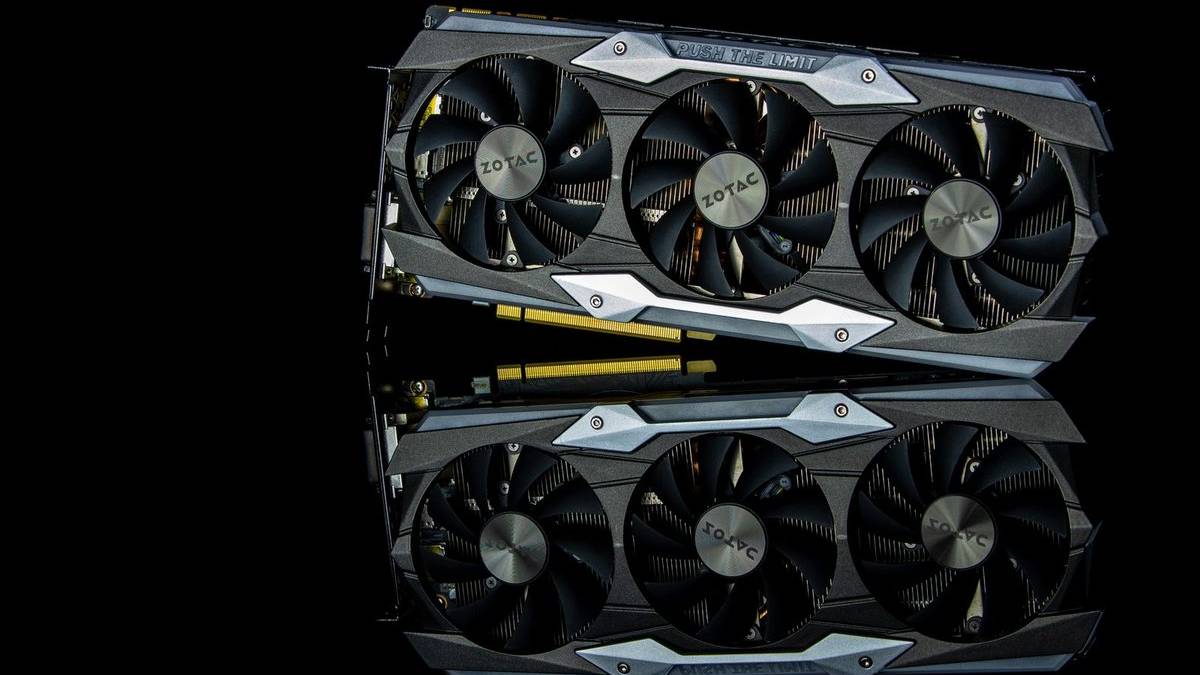
Hetzner has launched the GEX430, its first multi-GPU dedicated server: four NVIDIA RTX PRO 6000 Blackwell Max-Q GPUs with 96 GB of GDDR7 ECC VRAM each — 384 GB in total — in a single bare-metal machine rented by the month. Hetzner’s own product page, checked today, lists it at €3,599 per month (US pricing $4,199), plus a one-time setup fee of the same amount, excluding VAT, with an IPv4 address included. It is available only in Hetzner’s Helsinki data center (HEL1).
This is not a bigger VPS. It is a whole physical server with full root access, aimed at teams that run AI models around the clock: LLM inference for many concurrent users, fine-tuning, training, rendering and simulation. If your GPUs would sit idle most of the day, hourly cloud GPUs will cost less. If they run most of the month — especially with EU data-residency requirements — this fixed-price box is the alternative worth pricing out. Our explainer on what a GPU server is covers the basics; this article asks whether this machine earns its rent.
What Hetzner Launched
Hetzner announced the GEX430 in its pressroom as the first multi-GPU model in its GEX line of dedicated GPU servers. Until now, every GEX model carried exactly one GPU, and Hetzner is explicit that the single-GPU models still cannot be configured with more. The GEX430 is the only way to get four GPUs in one Hetzner machine.
The pitch, in Hetzner’s own framing, is memory. Product Manager Stefan Weiberg is quoted in the announcement making the point that for AI inference, graphics memory matters as much as compute: the more requests a model serves at once, the more VRAM it needs. Four cards let you either run one memory-hungry workload with far more headroom, or split the machine across several models in parallel — Hetzner’s example is one model for customer support, another assisting developers, a third processing incoming requests.
The second half of the pitch is sovereignty. Hetzner positions the GEX430 for running open-weight models — it names GLM, Mistral and Qwen — on dedicated hardware inside the EU, so internal documents, customer data and source code stay inside your own server environment instead of going to an external AI platform. For European companies with compliance constraints, that is the real product; the GPUs are how you get it.
The Full Specification
Everything below is from Hetzner’s press release and product pages, checked November 26, 2026:
- GPUs: 4× NVIDIA RTX PRO 6000 Blackwell Max-Q, 96 GB GDDR7 ECC VRAM each (384 GB total), each on its own PCIe 4.0 x16 connection direct to the motherboard. Fifth-generation Tensor Cores, fourth-generation RT Cores, FP4 support, 3,511 AI TOPS per card.
- CPU: Intel Xeon Gold 5412U — 24 cores, 48 threads.
- System RAM: 128 GB DDR5 ECC registered.
- Storage: 2× 1.92 TB Datacenter Edition Gen4 NVMe SSDs.
- Network: 1 Gbit/s connection, unlimited traffic on the standard uplink (Hetzner’s fair-use note applies only to the optional 10G uplink addon beyond 20 TB).
- Location: Helsinki (HEL1) only. No German or US option for this model.
- Operating systems: Debian and Ubuntu, 64-bit.
- Terms: no minimum contract term, cancellation immediately, full root access, IPv4 included, IPv6 /64 subnet. The GEX line is billed hourly up to the monthly cap, so a short test does not have to mean a full month — but the setup fee is charged regardless.
- Price: €3,599/month + €3,599 one-time setup (US: $4,199 + $4,199), excluding VAT. Hetzner’s product page showed the GEX430 in stock at the time of checking.
Two details deserve emphasis. First, there is no mention of NVLink or any GPU-to-GPU interconnect beyond PCIe — each card talks to the motherboard, not directly to its neighbors. Workloads that assume fast all-to-all GPU communication should benchmark before committing. Second, system RAM (128 GB) is one third of total VRAM (384 GB). That is fine for inference serving, but it is a real constraint for training pipelines that stage large datasets in CPU memory.
What 384 GB of VRAM Actually Buys
VRAM is the hard ceiling on AI serving. A model must fit in graphics memory together with its runtime overhead and, for inference, the key-value cache that grows with every concurrent conversation. That is why Hetzner leads with the 384 GB figure rather than raw TOPS: it determines which models you can load at all, and how many users you can serve before latency falls apart.
In practical terms, four 96 GB cards give you three distinct ways to use the machine. You can run one large model per GPU — four independent 96 GB pools, each comfortably holding a big open-weight model at useful precision, with separate teams or products on separate cards. You can run the same model on all four cards behind a load balancer to multiply concurrent throughput for a customer-facing chatbot or internal assistant. Or you can shard one very large model across cards — possible, but this is where the PCIe-only interconnect matters most, and where you should test your exact framework before signing up.
Multi-instance GPU (MIG) is supported on the GEX430, per Hetzner’s GPU matrix page, so one card can be partitioned into smaller isolated instances for lighter workloads — one heavy model, one medium model and a few small utility models can share the same rent.
How It Fits the Rest of the GEX Line
The GEX430 does not replace Hetzner’s single-GPU servers; it sits above them. The matrix page (checked November 26, 2026) lists four models. Prices for the single-GPU models change with Hetzner’s configurator and are not quoted here — check the matrix page for current figures — but the hardware ladder is clear:
| Model | GPU | VRAM | CPU | System RAM | Location |
|---|---|---|---|---|---|
| GEX45 | 1× RTX PRO 4000 Blackwell SFF | 24 GB | Intel Core i5-13500 (14 cores) | 64 GB DDR4 | Helsinki |
| GEX63 | 1× RTX PRO 6000 Blackwell Max-Q | 96 GB | Intel Core Ultra 7 265 (20 cores) | 128 GB DDR5 | Helsinki |
| GEX131 | 1× RTX PRO 6000 Blackwell Max-Q | 96 GB | Intel Xeon Gold 5412U (24 cores) | from 256 GB DDR5 ECC | Helsinki, Falkenstein |
| GEX430 | 4× RTX PRO 6000 Blackwell Max-Q | 384 GB total | Intel Xeon Gold 5412U (24 cores) | 128 GB DDR5 ECC | Helsinki |
Read the table as a decision tree. If one 96 GB card covers your model, the GEX63 or GEX131 is the rational buy and the GEX430 is overkill. The GEX430 only makes sense when you need more than 96 GB in one box — either a model (plus cache) that does not fit on one card, or several models running concurrently without queueing behind each other. Note also that the GEX131 offers far more system RAM (from 256 GB) than the GEX430’s fixed 128 GB, which matters for data-heavy training even though it has a quarter of the VRAM.
The Economics: Dedicated Rent vs Hourly Cloud
€3,599 a month sounds extreme until you divide it by hours. Run 24/7, the GEX430 costs roughly €5 per hour for four 96 GB Blackwell cards — about €900 per GPU per month — before the setup fee. Spread the €3,599 setup over a 12-month stay and it adds roughly €300 a month; over a single month, it doubles your first bill. That setup fee is the single most important number in the whole offer: it punishes short stays and rewards commitment.
That is the fundamental trade against hourly GPU clouds. Hourly billing has no setup fee and no commitment — ideal for bursty fine-tuning and experiments. Dedicated rent wins when utilization is high and steady: a production inference endpoint serving users all day burns through hourly rates far faster than €5 an hour for this much VRAM. Our earlier look at GPU cloud price increases in November 2026 is worth reading alongside this launch, because rising hourly prices are what push steady workloads toward fixed-price hardware. And if your budget is nowhere near €3,599 a month, start at the other end of the market with our roundup of the best cheap GPU VPS options for AI.
The break-even rule is simple: estimate your GPU-hours per month honestly. Busy most of the month — rent dedicated. Busy a few evenings a week — stay hourly. Also budget the human cost: this is an unmanaged server, so CUDA, drivers, monitoring and backups are yours to install and patch.
The Catches to Check Before Ordering
Helsinki only. If your users are in North America or Asia, every request crosses an ocean — fine for batch work, a latency problem for interactive serving.
PCIe, not NVLink. Each GPU connects over 16 PCIe 4.0 lanes; Hetzner advertises no high-speed GPU fabric. Parallel workloads will not care; tightly coupled multi-GPU training might. Test your real workload first — remembering the setup fee still applies.
128 GB of system RAM. Fine for inference, tight for training pipelines that stage huge datasets in RAM — the GEX131’s larger memory options may suit those better.
1 Gbit/s networking. Plenty for serving text, a bottleneck for regularly moving multi-terabyte datasets. The optional 10G uplink changes traffic terms beyond 20 TB.
Debian and Ubuntu only. No Windows, no other distributions offered on this model. For most AI stacks that is a non-issue, but it is a hard constraint.
Unmanaged, with a setup fee. No minimum term and immediate cancellation soften the commitment, but the €3,599 setup is sunk from day one. Treat the first month as a €7,198 decision (setup plus first month, before VAT), not a €3,599 one.
Who Should Rent It — and Who Should Not
Rent the GEX430 if you serve LLM inference to many concurrent users all day, run several production models in parallel, need open-weight models hosted inside the EU, or fine-tune often enough that hourly bills have become a budget line you dread.
Skip it if you are experimenting, training occasionally, or working with models that fit on one 96 GB card — single-GPU GEX models or hourly instances do the same job for a fraction of the commitment. Skip it also if your users are far from Finland, or if nobody wants to administer a bare-metal GPU server. A €3,599/month machine that sits idle is not a bargain at any spec.
FAQ
How much does the Hetzner GEX430 cost?
€3,599 per month plus a one-time setup fee of €3,599 (US pricing $4,199 + $4,199), excluding VAT, including an IPv4 address. Hetzner’s product page showed it in stock when checked on November 26, 2026. Confirm the live price at order time, as Hetzner adjusts pricing.
What GPUs does the GEX430 have?
Four NVIDIA RTX PRO 6000 Blackwell Max-Q GPUs, each with 96 GB of GDDR7 ECC VRAM — 384 GB total — with fifth-generation Tensor Cores, fourth-generation RT Cores and FP4 support, each connected via PCIe 4.0 x16.
Where is the GEX430 available?
Only in Hetzner’s Helsinki data center (HEL1) in Finland. The GEX131 is the only GEX model also offered in Falkenstein, Germany.
Can I rent the GEX430 by the hour?
Hetzner’s GEX line is billed hourly up to the monthly cap, so short use is possible — but the one-time setup fee (€3,599) still applies, which makes very short stays expensive. There is no minimum contract term.
Is the GEX430 good for training large models?
It has the VRAM for large models and Hetzner markets it for training and fine-tuning, but the GPUs connect over PCIe without an advertised NVLink fabric, and system RAM is 128 GB. Benchmark your exact training framework before committing, especially for tightly coupled multi-GPU training.
What is the difference between the GEX430 and the GEX63?
The GEX63 has one RTX PRO 6000 Blackwell Max-Q (96 GB VRAM) with a 20-core Core Ultra 7 CPU. The GEX430 has four of those GPUs (384 GB total) with a 24-core Xeon Gold CPU. Choose the GEX430 only if you need more than 96 GB of VRAM in a single machine or several models running in parallel.
The Bottom Line
The GEX430 is Hetzner doing what Hetzner does — hardware that usually rents by the hour at cloud prices, sold as a flat monthly dedicated server — at a scale it has never offered before. Four Blackwell cards and 384 GB of VRAM for €3,599 a month is genuinely competitive if the machine works hard: steady inference, parallel models, EU-hosted open-weight AI. It is a poor deal if the GPUs idle, your users are an ocean away, or one 96 GB card was all you needed. Do the utilization math first, test your framework second, then pay the setup fee.
Sources: Hetzner pressroom, “Hetzner introduces its first multi-GPU server with four NVIDIA Blackwell GPUs”; Hetzner GEX430 product page and GPU server matrix page (hetzner.com) — all checked November 26, 2026. Prices exclude VAT.
Leave a Reply